What Is Education?
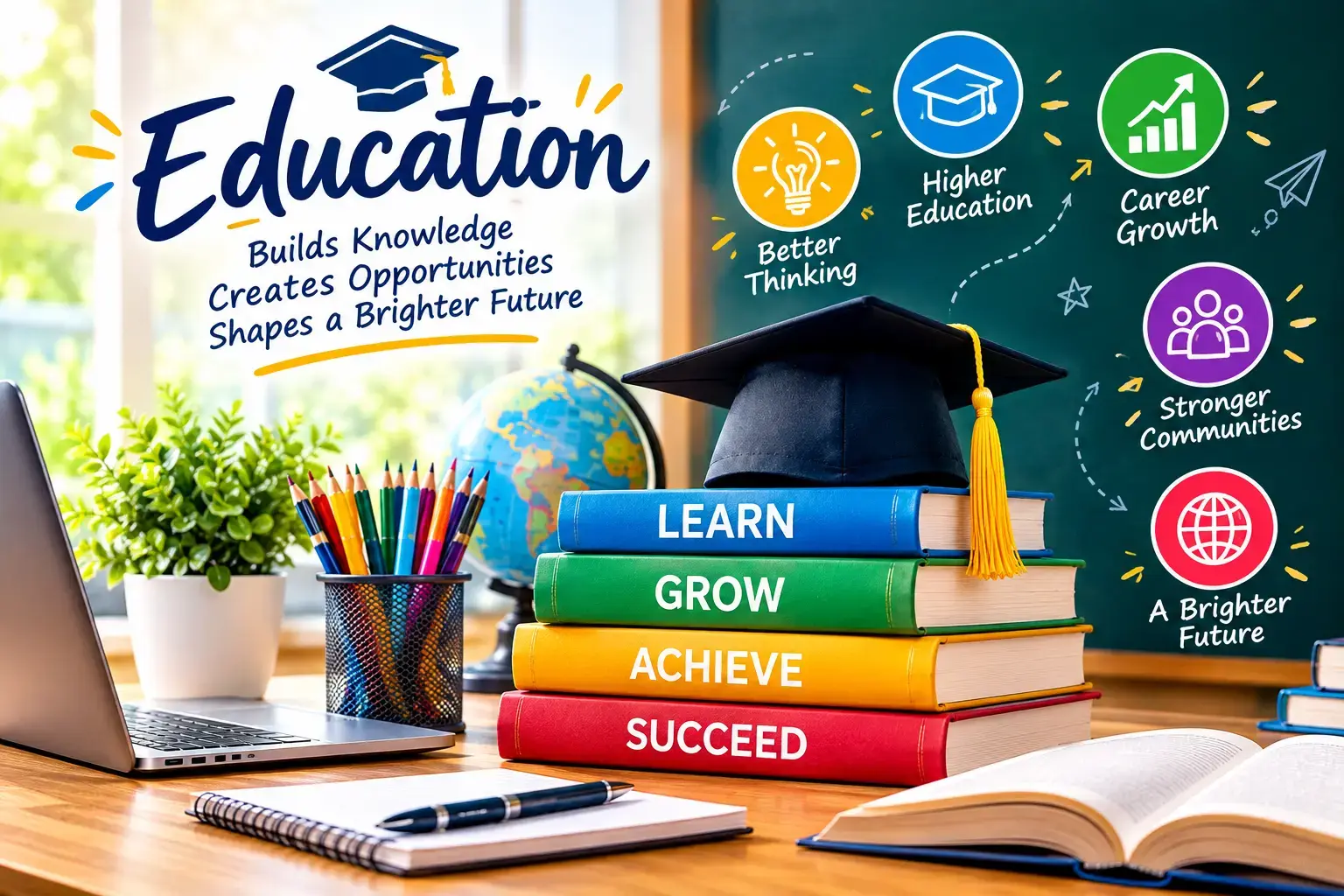
Education shapes how people understand the world, develop useful skills, and prepare for meaningful careers. It is more than time spent in a classroom. It includes formal study, practical training, online courses, self-directed learning, and real-world experiences that build knowledge.
For students and families across the United States, a strong learning foundation can create opportunities for personal growth, career development, and long-term confidence.
Education can begin during early childhood and continue throughout adulthood. People learn through schools, colleges, professional programs, community organizations, libraries, workplaces, and digital platforms.
The goal is not only to collect certificates or degrees. Good learning helps people understand ideas, solve problems, communicate clearly, and make informed decisions.
Why Is Education Important?
A strong learning experience can influence many areas of life. Students gain academic knowledge, but they also develop communication, teamwork, decision-making, and problem-solving abilities.
Builds Knowledge and Skills
Students need both academic and practical skills. Reading, writing, mathematics, science, technology, history, and communication create a foundation for future learning.
Practical projects can then help students apply those concepts to real situations. This combination makes learning more meaningful.
Strong educational programs also encourage curiosity. When students learn how to ask questions and find reliable answers, they become more independent learners.
Supports Career Development
Education and career development are closely connected. Employers often value people who can communicate clearly, solve problems, use technology, and adapt to change.
Higher education, vocational programs, certificates, apprenticeships, and professional training can help learners develop these abilities.
Career-focused learning can also introduce students to workplace expectations. Internships, career counseling, mentorship programs, and industry projects can give learners valuable experience before they enter the workforce.
Encourages Critical Thinking
Critical thinking is an important part of modern learning. It helps students evaluate evidence, compare ideas, identify assumptions, and make informed decisions.
These abilities are useful in classrooms and workplaces. They also help people evaluate information they encounter online.
In a world where people have access to large amounts of information, the ability to question sources and verify facts is increasingly valuable.
Major Types of Education
The United States offers many learning pathways. Each one supports different needs, interests, and stages of life.
Early Childhood Learning
Early childhood programs help young learners develop language, social skills, motor abilities, and basic academic habits.
Positive early experiences can help children become comfortable with learning. They can also support communication, cooperation, and classroom participation.
Parents and caregivers can support early development through reading, conversation, creative activities, and age-appropriate educational experiences.
K-12 Education
K-12 education provides structured learning from kindergarten through high school.
Students generally study subjects such as English, mathematics, science, history, arts, and physical education. Many schools also provide advanced classes, career programs, extracurricular activities, technology resources, and student support services.
A strong K-12 experience can prepare students for college, technical training, employment, and independent living.
Higher Education
Higher education includes colleges, universities, and other postsecondary institutions.
Students may pursue associate, bachelor’s, master’s, or doctoral degrees. These programs can provide specialized knowledge, research opportunities, professional preparation, and personal development.
Students should consider several factors before selecting a college. These may include accreditation, program quality, tuition, financial aid, location, graduation outcomes, student services, and career relevance.
Career and Technical Education
Career and technical education prepares learners for practical and skilled occupations.
Common fields include information technology, healthcare, construction, manufacturing, transportation, design, hospitality, and other industries.
Certificates, apprenticeships, community college programs, and technical schools can provide practical training. These options may appeal to learners who prefer hands-on experiences.
Online Learning
Online learning has expanded access to courses and professional development.
Students can study from home and often choose flexible schedules. Online programs may serve high school students, college learners, working professionals, and adults seeking new skills.
A quality online program should provide clear learning objectives, qualified instructors, reliable materials, meaningful assessments, and accessible student support.
Learners should also research accreditation or institutional recognition when it is relevant to their academic or professional goals.
Benefits of Quality Education
Quality education can provide benefits that extend beyond academic performance.
Better Communication Skills
Students practice writing, speaking, listening, and presenting ideas.
These skills can support relationships, teamwork, interviews, workplace communication, and leadership.
Clear communication is valuable in almost every career field. Students who practice these skills early can carry them into higher education and professional environments.
Stronger Problem-Solving
Projects and real-world assignments encourage students to identify problems, consider options, and test solutions.
Problem-solving activities can connect classroom concepts with practical situations.
This approach also encourages creativity. Students learn that one problem may have several possible solutions.
Greater Confidence
Learning new skills can improve confidence.
Completing a difficult project, understanding a challenging subject, or receiving constructive feedback can encourage students to take on new challenges.
Confidence does not mean knowing everything. It means being willing to learn, ask questions, accept feedback, and keep improving.
Social and Emotional Growth
Learning environments also support social development.
Students work with people who may have different experiences, perspectives, and backgrounds. Group projects and classroom activities can teach cooperation, empathy, responsibility, patience, and respectful communication.
These skills can influence both academic performance and future workplace relationships.
The Role of Technology in Modern Education
Technology has changed how students access information and practice skills.
Digital classrooms, educational platforms, interactive simulations, video lessons, learning apps, and collaborative tools can make learning more flexible.
Technology works best when it supports a clear learning objective. Students still need qualified guidance, reliable information, feedback, and opportunities to think independently.
Artificial intelligence is also becoming part of modern learning. Students may use AI tools for brainstorming, practice questions, explanations, research support, and organization.
However, learners should verify important information and follow their school’s academic integrity rules. Technology should support learning rather than replace independent thinking.
How Students Can Improve Their Learning
Students can improve their academic performance through simple and consistent habits.
Set Clear Goals
A clear goal gives study time direction.
Instead of saying, “I need to study,” students can create specific goals. For example, they can complete a chapter, practice a skill, review questions, or prepare for an upcoming test.
Small goals can make larger projects easier to manage.
Create a Study Routine
A realistic study routine can reduce last-minute pressure.
Students should choose a schedule that fits their responsibilities. Short, focused study sessions can be more useful than long periods of distracted work.
A consistent routine also makes it easier to track progress.
Practice Active Learning
Active learning encourages students to participate instead of simply reading information.
Useful techniques include summarizing concepts, answering questions, creating examples, teaching a topic to another person, and practicing problems.
These methods can improve understanding and help students remember important ideas.
Use Reliable Sources
Reliable information matters.
Students should compare sources and favor credible materials from universities, government agencies, libraries, professional organizations, and established educational institutions.
Learning how to identify trustworthy information is an important research skill.
Ask for Feedback
Feedback helps students understand their strengths and areas for improvement.
Teachers, tutors, mentors, counselors, and experienced professionals can provide useful guidance.
Students should treat constructive feedback as part of the learning process rather than as criticism.
Education and Lifelong Learning
Learning does not end when a person graduates.
Industries change. Technology develops. Job requirements evolve. As a result, adults may need to learn new skills throughout their careers.
Lifelong learning can include professional certificates, workshops, online courses, reading, mentoring, community classes, and personal projects.
The goal is not always to earn another degree. Sometimes a focused course or new skill can provide meaningful professional value.
Lifelong learning can also support personal interests. People may study languages, technology, business, creative subjects, financial literacy, or other areas that improve their daily lives.
Challenges in the U.S. Education System
The United States has many learning opportunities, but students can also face challenges.
Education costs, differences in access to resources, technology gaps, location, school quality, and changing workforce requirements can influence student outcomes.
Families can make informed decisions by researching schools and programs carefully. They can compare tuition, financial aid, student services, graduation information, curriculum, and career opportunities.
Community organizations, libraries, counselors, and local institutions can also provide useful support.
Addressing these challenges requires cooperation among educators, families, communities, policymakers, and students.
The Future of Education
The future of education will likely combine traditional classroom instruction with digital tools, practical experiences, and personalized learning.
Employers are expected to continue valuing communication, creativity, digital literacy, collaboration, and adaptability.
Schools and training providers can prepare learners by connecting academic concepts with real-world applications.
Project-based learning, internships, career exploration, technical training, and work-based experiences can help students understand how their skills apply beyond the classroom.
Technology may also make personalized learning more accessible. Digital platforms can help learners practice at their own pace and receive additional support.
However, technology alone cannot create effective learning. Strong teaching, accurate information, supportive environments, and meaningful human interaction remain important.
How to Choose the Right Learning Path
There is no single path that works for every learner.
Students should consider their interests, strengths, career goals, budget, preferred learning style, and long-term plans.
Someone interested in healthcare may benefit from a college degree or specialized training. A person interested in technology may explore a degree, certificate, bootcamp, or practical project portfolio.
Career goals can change over time. Students should remain open to new opportunities and continue developing transferable skills.
Research is also important. Before choosing a program, learners should review its curriculum, costs, reputation, student support, completion information, and career relevance.
Frequently Asked Questions
What is the main purpose of education?
The main purpose is to help people develop knowledge, skills, critical thinking, communication abilities, and practical capabilities that support personal, academic, and professional growth.
Why is education important for students?
It helps students build academic knowledge while developing problem-solving, communication, teamwork, and decision-making skills. These abilities can support future study and career opportunities.
What are the main types of education?
Major types include early childhood learning, K-12 education, higher education, career and technical education, and online learning.
Is online education effective?
Online learning can be effective when it provides clear objectives, quality instruction, reliable materials, meaningful assessments, and appropriate student support.
What is lifelong learning?
Lifelong learning means continuing to develop knowledge and skills throughout life. It can include formal courses, professional training, workshops, reading, mentoring, and self-directed learning.
Final Thoughts
Education gives people a foundation for learning, work, and personal development. Its value goes beyond grades and credentials.
A strong learning experience can help people build practical skills, think critically, communicate effectively, and adapt to change.
For students in the United States, the best learning path depends on individual goals, interests, resources, and career plans. Whether someone chooses K-12 study, college, technical training, online learning, or professional development, consistent learning can support long-term growth.
The most useful content about learning should also focus on accuracy, clarity, original value, and the needs of real readers. These principles align with Google’s broader people-first approach and help create content that serves users instead of simply targeting search engines.
Leave a Reply